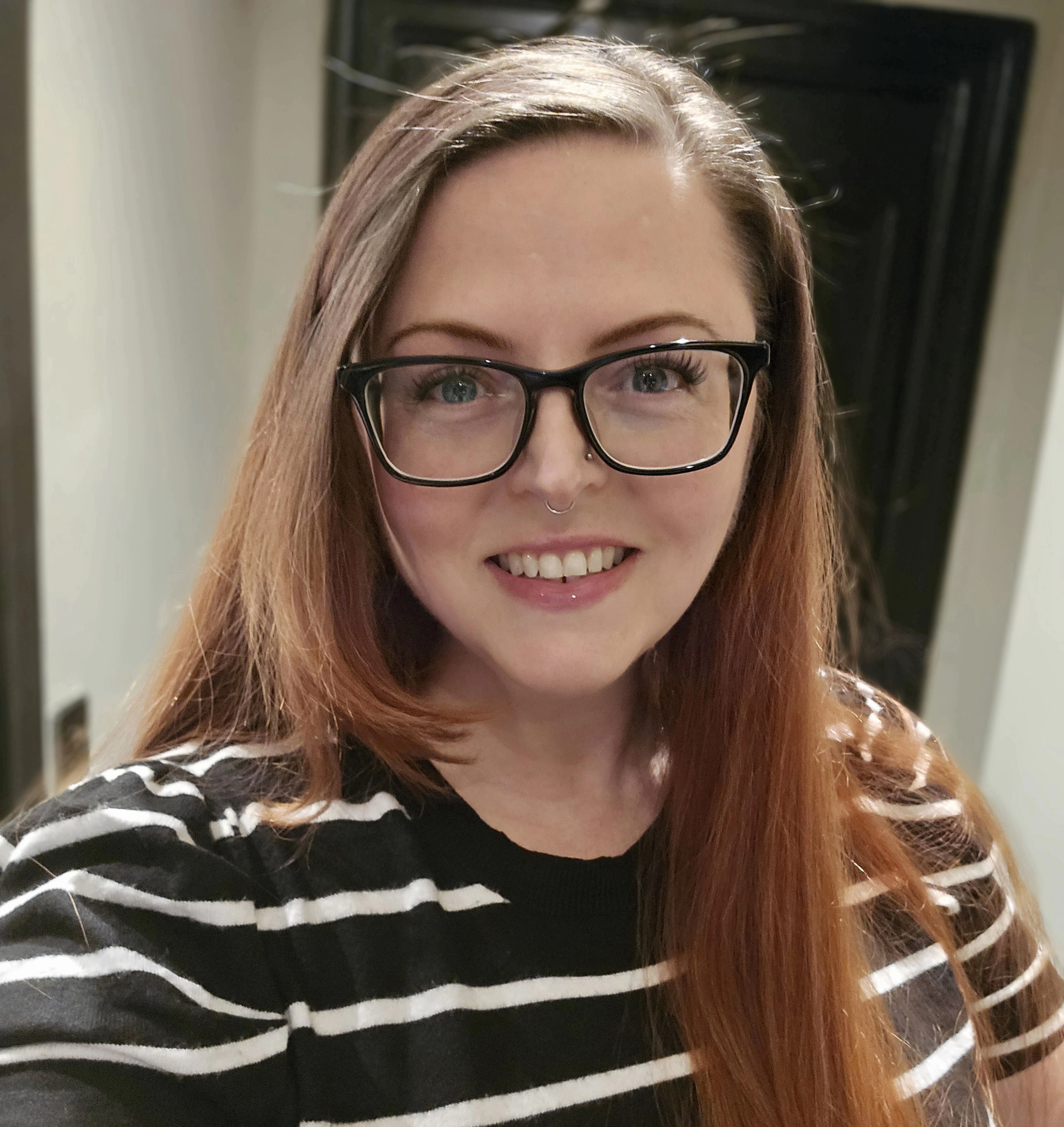
About
Health is a human right, and every person’s health and lived experience matter. My work is dedicated to advancing healthcare that is ethical, equitable, respectful, and responsive to the diverse needs of individuals and communities.

Education
She holds an MA in bioethics from the Ohio State University (2021) and an MSc in Public Health from Sweden’s Lund University (2017). She received her BAs, also from Ohio State, in Women’s, Gender, and Sexuality Studies and Communication Analysis (2015).
Debra’s interdisciplinary education in bioethics, public health, gender and sexuality studies, and communication shapes her approach to questions about health, medicine, identity, and social justice. Building on this interdisciplinary foundation, Debra brings more than ten years of experience analyzing health and social-science information, evaluating evidence, teaching diverse learners, and translating technical scholarship into clear educational and public-facing materials. Across her research and teaching, she is interested in how healthcare systems define, treat, and respond to different bodies and communities.
Her work is grounded in careful analysis, intellectual curiosity, and a commitment to making complex health, ethical, and social questions both rigorous and accessible. By bringing ethical analysis into conversation with the experiences of people whose perspectives have often been marginalized or overlooked, she seeks to contribute to healthcare practices and institutions that are more equitable, respectful, and accountable.
My values
Dignity and Self-Determination
I believe every person deserves to be treated as the authority on their own life, body, and identity. Dignity requires more than tolerance or inclusion; it requires respecting people’s capacity to define themselves, make informed decisions, and pursue lives that are meaningful on their own terms. This commitment shapes how I think about healthcare, education, research, and the institutions that influence our lives.


Listening with Humility
I value listening as both an ethical responsibility and a foundation for meaningful scholarship. People’s experiences cannot be reduced to assumptions, categories, or abstract theories. I strive to approach others with curiosity, humility, and an awareness of the limits of my own perspective. My role is not to speak for communities, but to listen carefully, take their knowledge seriously, and remain accountable to the people whose lives inform my work.
Knowledge in Service of Change
I believe scholarship should do more than describe inequity; it should help us understand how inequity is produced and what might be done differently. I am committed to work that is intellectually rigorous, publicly accessible, and responsive to real human concerns. Meaningful change is often gradual and imperfect, but careful research, thoughtful education, and sustained collaboration can help create healthcare and social institutions that are more just, compassionate, and accountable.

Debra’s research examines the ethical, social, and structural dimensions of healthcare inequities affecting LGBTQIA2S+ communities, with particular attention to intersex, transgender, and gender-expansive people. She is especially interested in how clinical practices, institutional norms, and medical decision-making shape bodily autonomy, reproductive choices, relationships with healthcare, and long-term health outcomes.
She has presented her work nationally and internationally and has published on topics including mental health inequities among transgender adults, fertility preservation for children with intersex traits, similarities and differences in the clinical care of transgender and intersex patients, and healthcare access for transgender refugees in the European Union.
Situated within queer bioethics, Debra’s scholarship draws on public health, feminist theory, disability ethics, and other interdisciplinary perspectives. Her work critically examines the assumptions and normative frameworks that shape medicine while contributing to more inclusive, equitable, and community-responsive approaches to care.
CWRU Courses Taught
- BETH 424: Queer Bioethics (designed and launched)
- BETH 602: Special Topics in Bioethics – Queer Bioethics
- BETH 371 Advanced Bioethics
- BETH 315/415: Study Abroad – Paris, France (co-instructor)
Teaching Interests
- Queer Methodologies
- Feminist Ethics
- Public Health Ethics
- Clinical Ethics
- Sexual and Reproductive Health Ethics
- Health and Healthcare Communication
- Disability Bioethics
- Qualitative and Narrative Approaches to Bioethics
- Hauntology, Memory, and the Health Humanities
Research Interests
- Queer Identities and Identifications
- Queer Bioethics and Critical Approaches to Health
- Intersex, Transgender, Nonbinary, and Gender-Expansive Health
- Medicalization, Embodiment, Identity, and Healthcare Relationships
- Sexual and Reproductive Health and Ethics
- Normativity, Antinormativity, and Queer Ethics
- Health Inequities Affecting Sexual and Gender Minority Populations
- Gender-Affirming Care for Transgender and Gender-Expansive Youth
- Queer and Crip Approaches to Health, Disability, and Embodiment
- Comparative and International LGBTQIA2S+ Health, with an Emphasis on Europe

